Twin-Shaft Concrete Mixers for Pipe Plants: JS500 to JS1500 Dry-Cast Mixing Mechanics, Moisture Control & Wear Liners
Optimizing planetary mixing energy for zero-slump roller and core-vibration dry-cast concrete: batching cycle times and moisture probes.
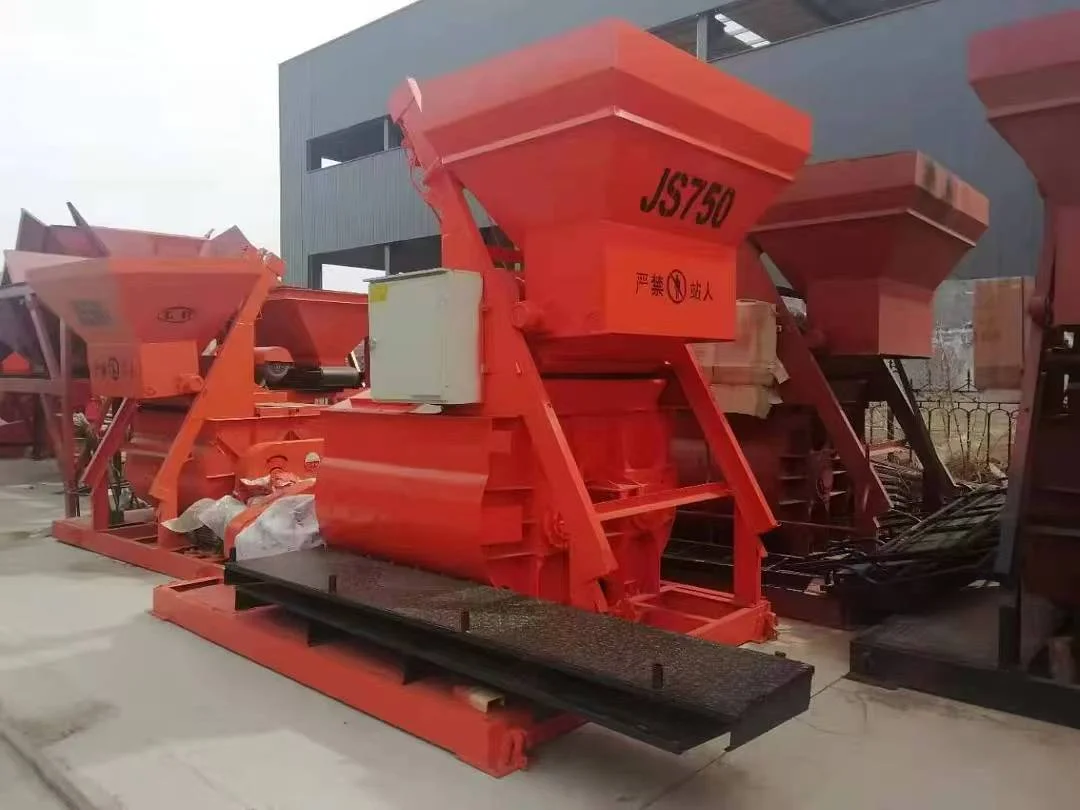
Zero-slump dry-cast concrete requires extreme mixing shearing energy to disperse cement paste across semi-dry aggregates. Learn how twin-shaft JS-series mixers optimize moisture control, prevent balling, and extend wear liner life.
1. The Unique Challenge of Dry-Cast Concrete Mixing
Concrete pipe making processes鈥攕pecifically horizontal suspension roller compaction and vertical rising-core vibration鈥攔equire dry-cast concrete with near-zero slump (slump 0鈥?0 mm, Vebe consistency 20鈥?0 seconds). Unlike wet ready-mix concrete, dry mixes contain very little free lubricating water.
Attempting to mix dry-cast low-slump concrete in gravity drum mixers (婊氱瓛鎼呮媽鏈? or single-axis pan mixers results in unmixed cement balls, aggregate segregation, and extreme blade stall. Compulsory twin horizontal shaft mixers (鍙屽崸杞村己鍒跺紡鎼呮媽鏈? are the globally proven industry standard.
2. Counter-Rotating Twin-Shaft Mixing Mechanics
In an HLY JS-series twin-shaft mixer, two synchronized counter-rotating horizontal shafts revolve inward at 30鈥?5 rpm. Mixing arms equipped with helical wear-resistant blades are arranged at alternating 45掳 angles.
This configuration creates a 3-dimensional turbulent mixing zone in the center of the mixing chamber. Aggregate, cement, and moisture are forced into intensive convection, shearing, and inter-particle friction, achieving 100% paste homogenization within 60 to 90 seconds without dead zones.
3. JS Series Model Range & Plant Sizing Table
HLY manufactures JS series compulsory mixers matched with PLD automatic aggregate batching machines:
| Mixer Model | Discharge Capacity | Batch Output (m鲁/h) | Dual Motor Power | Matched Pipe Equipment |
|---|---|---|---|---|
| JS500 | 500 Liters (0.5 m鲁) | 20 鈥?25 m鲁/h | 2 脳 9.2 kW (18.5 kW) | 1 脳 Suspension Roller Machine (DN300鈥揇N1000) |
| JS750 | 750 Liters (0.75 m鲁) | 30 鈥?35 m鲁/h | 2 脳 15 kW (30 kW) | 1 脳 Suspension Roller (DN800鈥揇N1500) or Small Core Vibration |
| JS1000 | 1,000 Liters (1.0 m鲁) | 45 鈥?50 m鲁/h | 2 脳 18.5 kW (37 kW) | 2 脳 Suspension Roller Lines or 1 脳 Large Core Vibration |
| JS1500 | 1,500 Liters (1.5 m鲁) | 65 鈥?75 m鲁/h | 2 脳 30 kW (60 kW) | Continuous Turnkey Plant (DN1200鈥揇N3000 Pipes & Box Culverts) |
4. Chromium-Manganese Wear Liners & Blade Metallurgy
Abrasive quartz sands and crushed basalt aggregates rapidly erode ordinary carbon steel mixer bodies. HLY JS mixers are armored with heavy modular wear-protection systems:
鈥?High-Chromium Alloy Lining Plates (Cr26 楂橀摤鑰愮(琛澘): Cast with 26% chromium content, heat-treated to a surface hardness 鈮?0鈥?4 HRC. Service life exceeds 50,000 mixing batches.
鈥?High-Strength Ductile Iron Mixing Arms: Hardened ductile iron with streamlined airfoil profiles to prevent concrete accumulation on arms.
鈥?Multiple Shaft End Seal Protection: 4-fold labyrinth mechanical floating seal rings backed by automatic electric grease pumps prevent cement paste from entering the heavy spherical roller bearings.
5. Real-Time Microwave Moisture Probes & Water Dosing
In dry-cast pipe manufacturing, a 0.5% fluctuation in aggregate moisture drastically alters demolding stability: too wet causes pipe wall collapse or slump upon stripping; too dry causes friable, porous surfaces.
HLY automated batching systems incorporate ceramic microwave moisture sensors embedded in the mixer floor. The PLC system reads aggregate moisture in real time, automatically calculating and adjusting trim water dosing within 卤1 Liter accuracy.
6. PLD Aggregate Batcher & Silo Integration
The mixer integrates with PLD-series 3-bin or 4-bin aggregate batching hoppers equipped with high-accuracy load cells (绉伴噸浼犳劅鍣? holding weighing errors under 卤1% for cement and 卤2% for sand and aggregate. Cement and fly ash are delivered via screw conveyors from sealed storage silos.
7. Frequently Asked Engineering Questions
Planning a Concrete Pipe Manufacturing Project?
Our engineering team provides comprehensive turnkey plant calculations, foundation layout drawings, mold customization specifications, and commercial quotations within 2 hours.
Related Technical Articles
Suspension Roller vs. Vertical Rising-Core Vibration: Which Concrete Pipe Machine Fits Your Plant?
Choosing between suspension roller compaction and vertical rising-core vibration determines your plant's capital layout, mold budget, and daily pipe output. We compare mechanical compaction dynamics, labor requirements, diameter capabilities, and total ROI.
Precast Concrete U-Channel Drainage & Flume Molding: High-Speed Slipform & Modular Steel Shuttering Guide
U-shaped concrete channels require strict demolding draft angles and smooth surfaces for rapid water flow. This technical guide explains steel mold design, vibratory table consolidation, and mass production setups for stormwater flumes.
Suspension Roller Concrete Pipe Production Process: Complete Step-by-Step Industrial Guide
Suspension roller pipe making machines are the global workhorse for producing high-density reinforced concrete pipes (DN300–DN2000). This comprehensive factory guide covers the end-to-end production workflow, from aggregate grading and CNC cage welding to dual-speed roller compaction and 4-stage steam curing.