Suspension Roller vs. Getar Inti Vertikal: Mesin Pipa Beton Mana yang Tepat untuk Pabrik Anda?
Perbandingan teknis langsung antara kapasitas produksi, investasi cetakan, toleransi beton dry-cast, dan presisi sambungan.
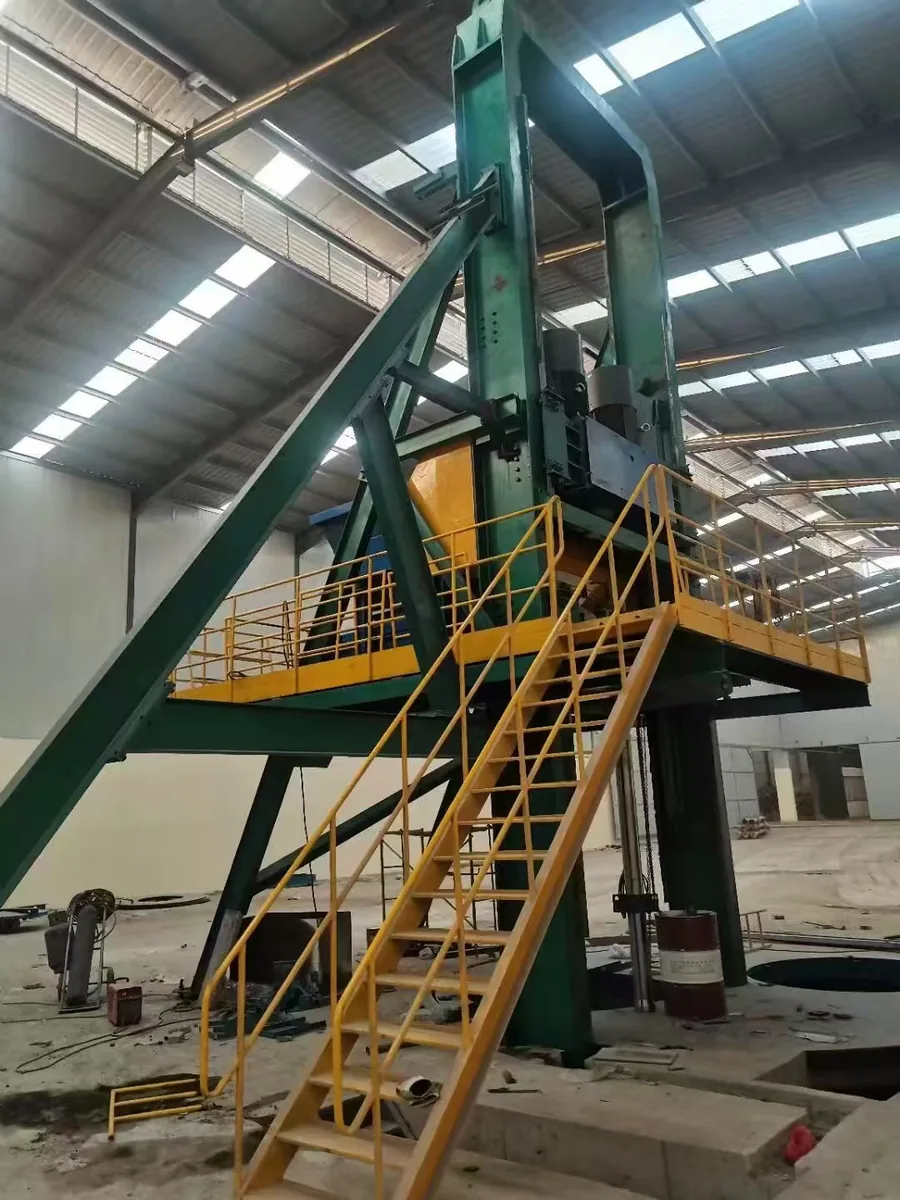
Memilih antara pemadatan suspension roller dan getaran inti vertikal menentukan anggaran cetakan dan output pipa harian Anda. Kami membandingkan dinamika pemadatan, kebutuhan tenaga kerja, dan analisis ROI.
1. The Technology Dilemma in Precast Concrete
Investors and plant managers establishing or expanding reinforced concrete pipe (RCC) manufacturing plants universally face one central decision: Should the facility install horizontal suspension roller compaction machinery, or invest in automated vertical rising-core vibration lines?
While both systems produce heavy-duty concrete pipes conforming to ASTM C76, BS 5911, and DIN EN 1916, their capital expenditure structure, mold requirements, floor space footprint, and operational flexibility diverge dramatically.
2. Working Principles & Forming Mechanics
Suspension Roller Machine: Operates horizontally. The pipe mold rests on a heavy roller shaft driven by an inverter motor. Dry-cast concrete is introduced via a feed conveyor. Centrifugal force holds the concrete against the mold circumference, while high line pressure from the roller shaft crushes and compacts the mix.
Vertical Rising-Core Vibration Machine: Operates vertically. The mold consists of an outer steel jacket, a bottom pallet ring, and a motorized internal core equipped with high-frequency hydraulic vibrators. Zero-slump dry concrete is fed from the top while the core vibrates at 3,000–4,500 rpm. Once compacted, the inner core automatically rises out, allowing immediate demolding of the outer mold within 3 to 5 minutes.
3. Direct Technical Comparison Matrix
| Engineering Criteria | Suspension Roller Line | Vertical Rising-Core Vibration |
|---|---|---|
| Diameter Range | DN300 – DN2000 mm | DN600 – DN3000 mm (up to DN3500) |
| Standard Pipe Length | 2.0 m, 2.5 m, 3.0 m, 4.0 m | 2.5 m, 3.0 m, 3.5 m |
| Demolding Speed | Requires steam curing before demolding (3–5 hr in mold) | Immediate demolding (3–5 minutes per pipe) |
| Mold Quantity Needed | 1 mold required per pipe produced per shift (e.g., 20–40 molds) | Only 1 outer mold needed per size + multiple bottom pallets |
| Initial Machine Cost | Moderate (Low entry barrier) | Higher (Advanced hydraulic/PLC systems) |
| Total Mold Investment | High when producing high daily volumes | Very Low (Only buy bottom pallets for volume) |
| Concrete Slump | Dry-cast (Vebe 20–30s) | Zero-slump (Dry-cast, high vibration liquefaction) |
| Labor Requirement | 2–3 operators per line | 3–4 operators per plant |
| Internal Surface Finish | Extremely smooth (Polished by spinning roller) | Smooth, dense vibrated surface |
| Jacking Pipe Production | Excellent up to DN2000 | Superior for large DN1200–DN3000 heavy jacking pipes |
4. Mold Economics & Capex Footprint
The greatest financial difference lies in mold expenditure. In a suspension roller facility producing 40 pipes per 8-hour shift, the plant must purchase and maintain 40 complete steel pipe molds, because the pipe must remain inside its mold throughout the initial steam curing cycle.
Conversely, a vertical rising-core vibration plant utilizes immediate dry-cast demolding. The single outer mold is stripped immediately after compaction and reused for the next pipe. The plant only requires inexpensive base pallet rings (底托盘) to support the curing pipes. For large pipe sizes (e.g., DN1500–DN3000), where individual steel molds can cost $8,000–$18,000 each, the vertical vibration line generates tremendous capital savings.
5. Production Output, Cycle Times & Labor
Cycle Times: A suspension roller machine requires 8–15 minutes of active rolling per pipe, producing 30–50 pipes per shift. A vertical rising-core system achieves complete feed, vibration, and core-stripping in 4–7 minutes, delivering 60–80 pipes per shift with automated batching.
Floor Space: Suspension roller plants require extensive horizontal trackways, gantry crane spans, and mold handling areas. Vertical plants require greater vertical building clearance (typically 10–12 meters hook height) but occupy a more compact ground footprint.
6. Ideal Application Scenarios for Each System
- Choose Suspension Roller When: Your target market demands high volumes of small to mid-diameter drainage and culvert pipes (DN300–DN1200); capital budget is focused on lean startup; your plant already has horizontal steam curing tunnels.
- Choose Vertical Rising-Core When: Your primary contracts involve large-diameter municipal storm sewers (DN1000–DN3000) or microtunneling trenchless jacking pipes; high daily output is required without storing dozens of massive steel molds; you want a modern, fully enclosed automated plant.
7. Engineering Recommendation & Decision Matrix
For new turnkey precast facilities entering infrastructure markets, the optimal configuration frequently combines both systems: a suspension roller line to handle high-velocity DN300–DN1000 culvert pipe orders, paired with a vertical rising-core station dedicated to large-diameter DN1200–DN3000 jacking and sewer infrastructure.
Planning a Concrete Pipe Manufacturing Project?
Our engineering team provides comprehensive turnkey plant calculations, foundation layout drawings, mold customization specifications, and commercial quotations within 2 hours.
Artikel Teknis Terkait
Molding Saluran Drainase U-Ditch Beton Pracetak: Panduan Bekisting Baja Modular
Saluran beton berbentuk U membutuhkan sudut pelepasan cetakan yang ketat dan permukaan halus untuk aliran air cepat. Panduan teknis ini menjelaskan desain cetakan baja, pemadatan meja getar, dan produksi massal u-ditch.
Mixer Beton Twin-Shaft untuk Pabrik Pipa: Mekanika Pencampuran Dry-Cast Seri JS & Kontrol Kelembaban
Beton kering slump nol membutuhkan energi geser pencampuran tinggi untuk menyebarkan pasta semen secara merata. Pelajari bagaimana mixer twin-shaft seri JS mengoptimalkan kontrol kelembaban dan memperpanjang umur plat aus.
Proses Produksi Pipa Beton Suspension Roller: Panduan Industri Lengkap Langkah demi Langkah
Mesin pipa beton suspension roller adalah standar global untuk memproduksi pipa beton bertulang kepadatan tinggi (DN300–DN2000). Panduan ini mencakup seluruh alur kerja dari pemilihan agregat hingga pemadatan rol kecepatan ganda dan perawatan uap 4 tahap.