Đúc Rãnh Thoát Nước Chữ U Bê Tông Đúc Sẵn: Hướng Dẫn Thiết Kế Cốp Pha Thép & Đúc Hàng Loạt
Chế tạo kênh mương thủy lợi nông nghiệp, rãnh thoát nước đường sắt và mương đô thị với góc vát thoát khuôn chuẩn xác.
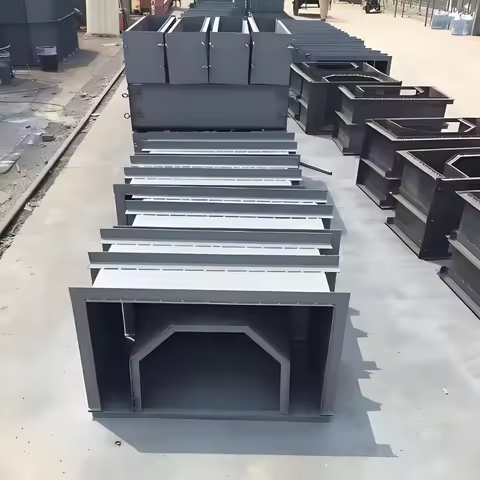
Mương rãnh bê tông chữ U đòi hỏi góc dốc thoát khuôn chuẩn và bề mặt lòng rãnh láng mịn để dòng chảy thông thoát. Hướng dẫn thiết kế khuôn thép, công nghệ đầm bàn rung và bố trí dây chuyền sản xuất số lượng lớn.
1. The Crucial Role of Precast U-Channels in Modern Infrastructure
From high-speed railway embankments and highway medians to urban stormwater gutters and agricultural water-saving irrigation networks, precast concrete U-channels (U型槽 / 排水沟) provide superior hydraulic conveyance efficiency compared to unlined earthen ditches or cast-in-place gutters.
Precasting U-channels in factory conditions ensures high compressive strength (C30/C35), low permeability, and glass-smooth hydraulic inverts with a low Manning roughness coefficient (n = 0.012–0.013), minimizing sediment buildup and water delivery losses.
2. Common U-Channel Cross-Sections & Dimensional Classes
HLY manufactures precision steel formwork for a broad spectrum of channel geometries:
- Municipal Drainage Gutters with Cast-Iron Grate Rebates: Standard widths 200–600 mm, depths 200–800 mm, featuring cast-in ductile iron or galvanized steel angle edge protection for traffic load bearing (EN 1433 Class C250 to F900).
- Agricultural Trapezoidal & Semi-Circular Irrigation Flumes: Top widths 600–2000 mm, lengths 2.0–4.0 m, designed for interlocking water-saving irrigation distribution networks.
- Deep Railway Cable & Utility Troughs: Multi-compartment U-channels with matching precast concrete cover slabs.
3. Modular Gang Mold Engineering & Draft Angle Design
Productivity in precast U-channel manufacturing depends upon maximizing output per casting cycle while avoiding surface damage during core withdrawal.
| Design Feature | Standard Fabrication Specification | Operational Advantage |
|---|---|---|
| Gang Mold Configuration | 4 to 8 channel bays per master frame | Multiplies output per crane hoist cycle |
| Demolding Draft Angle (拔模斜度) | 1.5° to 2.5° precision taper on inner core | Prevents surface shear tearing upon stripping |
| Steel Facing Material | 5 mm – 6 mm Q235B cold-rolled steel plate | Zero wave distortion, high wear resistance |
| Hinged Side Formwork | Quick-acting cam-lock levers and hinged wings | Tool-free opening in under 30 seconds |
| Interlocking Joint Profile | Stepped shiplap or tongue-and-groove ends | Ensures precise alignment and mastic sealing |
4. Vibration Consolidation: Table Vibrators vs. Core Poking
Manual poker vibration is inefficient and produces inconsistent concrete density along thin channel walls. HLY recommends two automated consolidation methods:
1. Synchronized High-Frequency Vibration Tables: The complete gang mold is clamped pneumatically to a heavy vibration table operating at 2,800–3,600 rpm. Vibration energy transmits through the entire steel mold, fluidizing low-slump concrete in 45–60 seconds.
2. Formwork-Mounted Pneumatic Vibrators: High-amplitude rotary ball or turbine vibrators mounted symmetrically on the mold frame deliver directional vibration directly to the vertical walls.
5. High-Durability Anti-Scour Concrete Mix Specifications
Because drainage channels and irrigation flumes face continuous water flow, abrasive suspended sand, and freeze-thaw cycles, the concrete mix must achieve:
• Minimum Compressive Strength: C30/C35 (30–35 MPa) at 28 days.
• Water-Cement Ratio: Kept low at 0.36 to 0.40 using polycarboxylate superplasticizers.
• Coarse Aggregate: Crushed basalt or granite (max size 10–15 mm, graded) to resist water scour.
• Air Content: 4.0% to 5.5% air entrainment for cold climates subject to winter de-icing salts.
6. Demolding Cycles, Grate Seating & Storage Yard Handling
With accelerated steam curing or radiant heat beds, U-channel gang molds complete 2 to 3 turnover cycles per 8-hour shift. Precast units are hoisted using specialized scissor clamps or lifting threaded sockets cast into the channel walls.
Channels are palletized horizontally with timber battens between tiers (maximum 5 tiers high), ready for immediate flatbed container loading.
7. Frequently Asked Engineering Questions
Planning a Concrete Pipe Manufacturing Project?
Our engineering team provides comprehensive turnkey plant calculations, foundation layout drawings, mold customization specifications, and commercial quotations within 2 hours.
Bài Viết Kỹ Thuật Liên Quan
Máy Trục Lăn Treo So Với Máy Rung Lõi Đứng: Đâu Là Dòng Máy Phù Hợp Nhất Với Nhà Máy Của Bạn?
Lựa chọn giữa máy đầm lăn ly tâm trục treo và máy rung lõi nâng đứng quyết định cơ cấu vốn khuôn và sản lượng cống mỗi ngày. Phân tích chi tiết động học đầm nén, nhu cầu nhân công và hiệu quả thu hồi vốn.
Máy Trộn Bê Tông Hai Trục Cho Nhà Máy Cống: Cơ Chế Trộn Bê Tông Khô Slump Thấp Dòng JS & Kiểm Soát Độ Ẩm
Bê tông khô không độ sụt đòi hỏi năng lượng cắt trộn cực lớn để bao bọc hồ xi măng quanh cốt liệu bán khô. Hướng dẫn vận hành máy trộn hai trục cưỡng bức dòng JS kiểm soát độ ẩm chính xác và kéo dài tuổi thọ tấm lót chống mòn.
Quy Trình Sản Xuất Cống Bê Tông Bằng Máy Trục Lăn Treo: Hướng Dẫn Kỹ Thuật Công Nghiệp Toàn Diện
Máy đúc cống trục lăn treo là thiết bị chủ lực trên thế giới để sản xuất cống bê tông cốt thép tỷ trọng cao (DN300–DN2000). Cẩm nang nhà máy này bao gồm quy trình khép kín từ cấp phối vật liệu đến ép lăn hai cấp tốc độ và hấp bảo dưỡng hơi nước.